


Transmission Solenoid Valve Testing Equipment
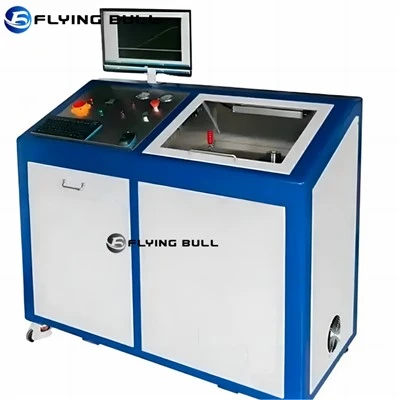
Professional Test Bench for Transmission & Engine Solenoid Valves Automatic transmissions (AT, DCT, CVT, DHT) and engine VVT systems depend on precise solenoid valve performance. A valve that shifts too slowly, opens at the wrong pressure, or leaks internally can cause transmission slippage, harsh shifts, or check engine lights. The transmission solenoid valve testing equipment from Flying Bull is a professional test bench designed for laboratory (performance and durability) testing and product off‑line testing. It is suitable for transmission solenoids, engine VVT solenoids, and other valve parts. Applications – what you can test Transmission solenoid valves (AT, DCT, CVT, DHT) – Shift solenoids, lock‑up solenoids, pressure control solenoids, TCC solenoids. Laboratory testing – Performance characterization and durability (life cycle) testing. Product (off‑line testing) – Quality control on production lines or incoming inspection. Engine VVT solenoid valves – Variable valve timing oil control valves (OCV). Laboratory testing – Performance curves and durability. Product (off‑line testing) – Verifying each valve before installation. Other valve parts – Pneumatic solenoids, hydraulic proportional valves, on/off solenoids. Laboratory testing – Performance and durability. Product (off‑line testing) – Pass/fail verification. Functional features – what the equipment does 1. IP characteristic detection – The test equipment can detect the IP characteristics of a solenoid valve. IP stands for I (current) vs. P (pressure). The system generates a characteristic curve showing control current (mA or A) on one axis and control pressure (bar or psi) on the other. It then compares the IP characteristic of the valve under test with the IP characteristic of a known‑good (qualified) valve pre‑set in the system. This comparison allows the operator to determine the current performance state of the solenoid valve. Whether the valve is qualified or not can be determined intuitively through the data – no guesswork. 2. Three test modes for high reliability – The system includes three voltage (current) regulation modes to avoid missing or incorrect detections: Rapid voltage regulation – Fast sweep to identify gross failures. Step voltage regulation – Incremental steps to find small non‑linearities. Slow voltage regulation – Very fine sweep for precision measurement. Using all three modes increases the detection success rate. Small or intermittent faults are less likely to be missed. 3. Rich test mode selection – Most solenoid valves can be evaluated through ordinary mode (basic performance test). For individual valves that have occasional (intermittent) failures, the system can perform a durability test (cycling the valve many times). No matter how small the fault, it cannot escape the machine’s “eye” (sensors and data logging). 4. Easy operation (“fool operation”) – Even though the test machine is professional, the operation is not complicated at all. The overall use can be described as “fool operation” (simple, user‑friendly). An operator can become skilled in operating and using the machine in a short time. No need to arrange a dedicated, highly specialized person to run the machine. This allows you to reasonably arrange human resources and improve work efficiency. 5. Fast fault identification – Pressure regulation characteristics or durability tests can be performed individually or in combination, depending on the solenoid valve type. The system can identify a faulty solenoid valve in just a few minutes. 6. Repair guidance for non‑destructive faults – For non‑destructive solenoid valve faults – such as non‑structural issues (e.g., contamination causing sticking) or fatigue (slow response but not broken) – the test data can guide repair through reasonable combination testing. For example, cleaning the valve and retesting may show restored performance. Why choose Flying Bull transmission solenoid valve testing equipment? IP characteristic comparison – Objective pass/fail based on data. Three regulation modes – Catches intermittent and subtle faults. Durability testing – For valves with occasional failures. Easy to use – Short learning curve. Fast results – Minutes per valve. 100% brand new – Not used or refurbished. 1‑year warranty – Against manufacturing defects. Flying Bull’s transmission solenoid valve testing equipment is a professional, easy‑to‑use test bench for quality control, incoming inspection, and R&D. Choose Flying Bull for reliable solenoid valve testing.
Product Introduction
Products Description
Transmission Solenoid Valve Test (AT, DCT, CVT, DHT)
● Laboratory (Performance, durability)
● Product (off-line testing)
Engine VVT Solenoid Valve Test
● Laboratory (Performance, durability)
● Product (off-line testing)
Test Other Valve Parts
● Laboratory (Performance, durability)
● Product (off-line testing)
Functional Features
The transmission solenoid valve Testing equipment can detect the IP characteristics of the solenoid valve (that is, the characteristic curve of the control current and control pressure of the solenoid valve), and compare the IP characteristics of the solenoid valve under test with the IP characteristics of the qualified solenoid valve preset by the system, so that the current performance state of the solenoid valve under test can be determined, whether it is qualified or not can be determined intuitively through the data.
Very perfect test project, through the rapid voltage regulation, step voltage regulation, slow voltage regulation three modes of testing, avoiding missing and wrong detection, improve the detection success rate.
Rich test mode selection, most of the solenoid valve through the ordinary mode detection on the line, for individual occasional failure of the solenoid valve can be durability test, no matter how small the fault can not escape the machine "eye".
Don't look at the test machine is so professional, but the operation is not complicated at all, the overall use can be described as "fool operation", you can be skilled in operating and using the machine in a short time, without arranging a special person to use the machine, so that you can reasonably arrange human resources and improve work efficiency.Pressure regulation characteristics or durability tests can be performed individually or in combination with the solenoid valve type to identify the solenoid valve in a few minutes. For non-destructive solenoid valve faults such as non-structural or fatigue, they can be repaired through reasonable combination testing.


Company Introduction


Frequently Asked Questions (FAQ)
1. What types of solenoid valves can this testing equipment handle?
It can test transmission solenoids (AT, DCT, CVT, DHT), engine VVT solenoids, and other hydraulic/pneumatic valve parts. It is suitable for laboratory (performance, durability) and product (off‑line) testing.
2. What does "IP characteristic detection" mean?
IP stands for I (current) versus P (pressure) . The test equipment generates a characteristic curve showing how output pressure changes as input current varies. It compares this curve to a known‑good (qualified) valve curve. The operator can see immediately whether the tested valve passes or fails.
3. What are the three voltage (current) regulation modes?
(1) Rapid voltage regulation – fast sweep for gross failures. (2) Step voltage regulation – incremental steps to find small non‑linearities. (3) Slow voltage regulation – very fine sweep for precision measurement. Using all three modes improves detection success rate and avoids missing intermittent faults.
4. Why are three regulation modes better than just one?
A fast sweep may miss a small hysteresis or non‑linearity. Step regulation catches step‑related errors. Slow regulation provides high precision. Combining all three modes ensures that small, intermittent, or subtle faults are not missed. This improves detection success rate.
5. How does the equipment test for occasional (intermittent) failures?
For valves that sometimes work and sometimes do not (occasional failure), the system can perform a durability test – cycling the valve hundreds or thousands of times. Data logging captures any cycle where the valve fails to perform correctly. No matter how small the fault, it cannot escape the machine's sensors.
6. Is the testing equipment difficult to operate?
No. Even though the machine is professional, the operation is not complicated. The overall use can be described as "fool operation" (simple, user‑friendly). An operator can become skilled in a short time. No need for a dedicated, highly specialized technician.
7. How long does it take to test a solenoid valve?
The system can identify a faulty solenoid valve in just a few minutes for basic performance testing. Durability testing (life cycle) takes longer depending on the number of cycles required.
8. Can the test data help repair a solenoid valve?
Yes. For non‑destructive faults – such as contamination causing sticking (non‑structural) or fatigue (slow response but not broken) – the test data can guide repair. For example, cleaning the valve and retesting may show restored performance. Reasonable combination testing helps identify the root cause.
9. What is the difference between laboratory testing and product off‑line testing?
Laboratory testing is for R&D, performance characterization, and durability validation – longer, more detailed. Product off‑line testing is for quality control on production lines or incoming inspection – faster, pass/fail determination.
10. Does the transmission solenoid valve testing equipment come with a warranty?
Yes. Flying Bull provides a 1‑year warranty against manufacturing defects. Damage caused by incorrect power supply, improper use, contamination, or physical damage is not covered. Proper operator training is recommended.
Hot Tags: transmission solenoid valve testing equipment, China transmission solenoid valve testing equipment manufacturers, suppliers, factory, tools for vehicle camshafts, automotive stress testing machines, vehicle gearbox testing machines, car fuel filter repair tools, vehicle wheel bearing testing machines, vehicle pushrod testing machines
You Might Also Like



Send Inquiry
