

Company Profile
Automotive solenoid valves and sensors are our company's featured products. At the same time, our company is also a professional manufacturer specializing in the production of solenoid valve coils and special solenoid valves and other automation supporting components. Most of our products are used in pneumatic, hydraulic and other automation control component industries. At present, our products have been used by many internationally renowned brands and are deeply trusted by our customers.
Why Choose Us
Advanced Equipment
Flying Bull (Ningbo) Electronic Technology Co.,Ltd has an excellent team with more than 20 years of experience in design and development, focusing on the design, development and production of auto solenoid valve and sensor, engineering machinery solenoid valve and sensor.
Rich Experience
The company adheres to the business philosophy of "expert quality, global trust" and the business purpose of "pursuing quality, never ending".
High Quality
Quality is always our Flying Bull's unchanging concept. The company has established a research and development center, measurement room, laboratory, and chemical analysis room, and launches a number of high-tech products every year.
Professional Team
The company has strong R&D capabilities to lay a good foundation for the development and cooperation of new products for customers. First-class talents, advanced equipment, strict quality control system, scientific management, perfect service, and strong R&D capabilities, let us work together to become industry pioneers and win an unlimited future.

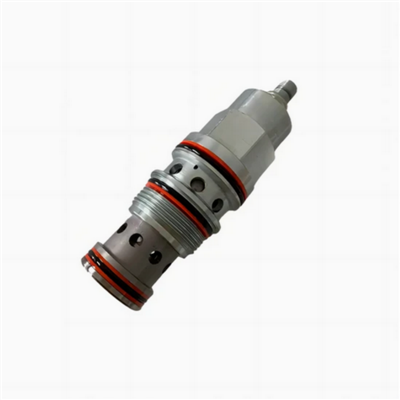


A hydraulic valve is a mechanical device that regulates the flow of the hydraulic fluid in a hydraulic system. Hydraulic systems are typically high pressure systems, ranging from 200 Bar averaging 700 Bar upwards. This means they have to be constructed from materials that can withstand these high pressures. The methods of controlling these valves are also vast. They can be controlled physically and mechanically with electrical actuation, hydraulics, and pneumatics.

Benefits of Hydraulic Valve
Hydraulic valves have a simple and compact structure.
Hydraulic valves are small enough to fit into corners and places that are difficult to access. They can fit into your pipeline at almost any point and won’t take up extra space once installed.
Smooth and Reliable Hydraulic Transmission
Hydraulic systems offer the silky-smooth fluidity of liquid power transmission, so you can depend on a tight-sealing hydraulic valve for years to come.
Large Output Torque
Hydraulic power means extra power. Having more torque in valve actuation means that hydraulic valves can service fast flow rates and overcome high pressures easily.
Adjustable Output Torque
The output torque can be precisely adjusted by the constant pressure relief valve, including the adjustment of opening and closing torque, which can even be directly reflected by the hydraulic meter.
Convenient Speed Regulation
Regulating the flow rate is another important advantage of hydraulic valves. If your application demands articulate actuation and precise flow regulation, you should consider using hydraulic valves.
Type of Hydraulic Valve
Relief Valves
They keep the system pressure below a set level. They can be used to sustain upstream or downstream pressure from the valve. They also serve as protection to the equipment against pressure spikes or pulses.
Sequence Valves
These are pressure operated valves, usually come as normally closed valves to open when the fluid pressure rises to a certain level
Counterbalance Valves
These valves will allow free flow of the fluid into the actuator but block out reverse flow until a certain pressure is reached.
Unloading Valves
These valves will stop the pump’s flow or remove it and send it back to the tank, especially when the machine isn’t operating.
Relief Valves
Many fluid power systems work within a set pressure limit. These limits or ranges are a function of the generated forces required to do the work by the actuator. If these are left unmonitored, there can be excessive damage to the equipment. Relief valves chip in to help safeguard to prevent machine damage and operator damage.
Methods Of Flow Control Used by Hydraulic Valves


Throttle flow control
Choke flow control is where the size of the channel is changed to change the flow rate. In the picture depicted above, changing the cutout area on the valve will help change the flow. Bernoulli’s principle explains this well.
Pressure compensation flow control
Pressure compensation flow control valves are designed to maintain a constant volume flow rate regardless of any drop in pressure at the valve.
It will have a variable angle and a pressure loss compensation mechanism. The water flows along the channel as shown above. enter through the inlet at which the pressure loss complement changes size. In this example, the pressure loss compensation is a loss compensation spool.
Fixed flow control
This is a basic flow control technique. An otherwise blocked waterway has a dug hole that acts as a tunnel. When used for flow control, water pumps are usually installed in series.
Adjustable flow control
The most common valve for changing flow is a priority valve. Priority valves will only change the flow to the required areas at a given time. For example, if the pressure in a system decreases to a certain point, the primary will simply restrict flow and allow critical flow to flow. It does this with a spring load that responds based on applied pressure.
Hydraulic valve is a device used to control the flow of liquid. It can control the flow of liquid by changing the direction, pressure, flow rate and other parameters of the liquid flow, thereby realizing the control of the hydraulic system. The principle of hydraulic valve is to use the pressure of the liquid to control the movement of the valve core, thereby changing the opening and closing state of the valve. Hydraulic valve is usually composed of valve body, valve core, spring, seal and other parts. When the liquid flows through the valve body, the valve core will be affected by the liquid pressure, so that it moves to different positions and changes the on-off state of the valve. The function of hydraulic valve is to control and adjust the parameters such as flow, pressure, direction and so on in the hydraulic system. It can control the flow direction of the liquid by changing the opening and closing state of the valve, and can also control the flow and pressure of the liquid by adjusting the opening of the valve. Hydraulic valve plays a very important role in the hydraulic system. It can ensure the stability and reliability of the system, and also improve the efficiency and performance of the system.
Applications of Hydraulic Valves
Manufacturing and Automation: Hydraulic valves are integral to industrial machinery and automation systems, where they control the movement of robotic arms, conveyor systems, and machine tools with precision and efficiency.
Construction and Earthmoving Equipment: Hydraulic valves power the hydraulic systems of construction machinery, such as excavators, loaders, and bulldozers, enabling precise control over lifting, digging, and material handling operations.
Aerospace and Defense: Hydraulic valves are used in aircraft and military vehicles to control landing gear, flight control surfaces, and weapon systems, ensuring safe and reliable operation in demanding environments.
Automotive and Transportation: Hydraulic valves play a vital role in automotive braking systems, power steering systems, and suspension systems, providing responsive and reliable control over vehicle dynamics and safety features.
What is the Basic Working Principle of Hydraulic Valve
The basic working principle of Hydraulic Valve mainly relies on the relative movement of the valve core in the valve body to control the pressure, flow and direction of the liquid in the hydraulic system by changing the size and on-off state of the valve port. It is a key component in the hydraulic transmission system and plays a vital role in ensuring the normal operation and safety performance of the hydraulic system.
First, the gap between the Hydraulic Valve's valve core and valve body is sealed. When the Hydraulic Valve is closed, the valve core will fit tightly into the valve seat, preventing fluid from passing through. At this time, the liquid in the hydraulic system cannot flow, thus achieving the purpose of closing the hydraulic passage.
When the Hydraulic Valve needs to be opened, the control element exerts a certain force on the valve core to make it move. As the valve core moves, the channels in the valve body gradually open, allowing the pressure oil to flow from the inlet to the outlet, and the liquid in the hydraulic system can circulate. At this time, the Hydraulic Valve plays a role in regulating flow and changing flow direction.
The position of the spool determines the pressure and flow of liquid in the hydraulic system. By controlling the degree of movement of the spool, Hydraulic Valve can accurately adjust the pressure and flow of the hydraulic system to meet different working needs.
In addition, Hydraulic Valve can also automatically change the position of the valve core according to the signal from the control component to achieve automated control of the hydraulic system. This control method enables Hydraulic Valve to adapt to various complex working environments and changing work requirements.
During the working process of the Hydraulic Valve, the spring is usually used to control the initial position and reset of the valve core. When the force exerted by the control element disappears, the spring will return the valve core to its original position, closing the valve and ensuring the safety of the hydraulic system.
Parts of Hydraulic Valves
Flexible Coupling
A flexible coupling in a hydraulic valve system provides the necessary connection between the input and output shafts, allowing for the transmission of motion and power while compensating for misalignment.
Control Shaft
The control shaft serves as a critical component in hydraulic valves, enabling manual or automated control of the valve's position and function. It links the operator or actuator to the valve mechanism, facilitating precise control over fluid flow.
Spool
Spools are central to the operation of directional control valves, as they are responsible for directing the flow of hydraulic fluid. By moving within the valve body, the spool redirects fluid to different paths, facilitating various functions like stopping the flow, allowing flow, or changing its direction.
Control Thread
Control threads are vital elements in fine-tuning the hydraulic valve's settings. By adjusting control threads, operators can regulate the valve's response and behavior to suit specific operational requirements.
Feedback Spindle
A feedback spindle is often used to provide operators with information about the valve's position or status. It relays real-time feedback to the operator, ensuring precise control and monitoring of the valve's performance.
Piston Ring Area
The piston ring area is a critical part of hydraulic pistons, maintaining a tight seal within the cylinder. It prevents fluid leakage and ensures efficient hydraulic pressure transfer.
Piston Rod
The piston rod connects the piston to external components, transmitting the hydraulic force generated within the cylinder to perform mechanical work. It's a key element in various hydraulic systems, including cylinders and actuators.
NC Valve
An NC (Normally Closed) valve is a type of directional control valve that remains closed until actuated. When activated, it allows fluid to flow, making it a fundamental component in controlling the flow of hydraulic fluid within a system.
Piston
Pistons are essential components in hydraulic cylinders and motors. They move within a cylinder in response to hydraulic pressure, generating mechanical force or motion, making them crucial for various applications, including lifting and pushing.
Pilot Motor
A pilot motor is often used to control larger hydraulic valves or systems. It serves as an actuator that, when triggered, initiates the movement of the main valve or component, providing precise control over hydraulic functions in complex systems.

Best Practices for hydraulic valve Maintenance and Repair
Hydraulic valve longevity and optimal performance largely depend on regular maintenance and timely repair. By ensuring that hydraulic valves function at their best, one can not only improve system efficiency but also avoid potential hazards and costly downtimes.
Regular Inspection: Schedule periodic inspections to check for signs of wear, leakage, or damage. Visual inspections can help identify external issues, while functional tests can reveal internal malfunctions.
Stay Updated on hydraulic valve Specifications: As hydraulic systems evolve, so do their components. Regularly review manufacturer recommendations and guidelines to ensure that hydraulic valves are being used and maintained as intended.
Cleanliness is Key
Ensure the hydraulic fluid is free from contaminants. Use high-quality filters and change them at regular intervals. Keeping the fluid clean can prevent many hydraulic valve-related issues.
Avoid Over-pressurization
Frequently monitor system pressure. An over-pressurized system can damage hydraulic valves and reduce their lifespan. Ensure that pressure relief hydraulic valves are functioning correctly to protect the system.
Lubricate Moving Parts
While many hydraulic hydraulic valves are self-lubricating due to the hydraulic fluid, some external components may require occasional lubrication to ensure smooth operation.
Replace Worn Components
Parts like seals, springs, and spools can wear out over time. Instead of waiting for a complete failure, replace these components proactively based on usage and wear patterns.
Automotive solenoid valves and sensors are our company's featured products. At the same time, our company is also a professional manufacturer specializing in the production of solenoid valve coils and special solenoid valves and other automation supporting components.


Our Certificate


FAQ
As one of the leading hydraulic valve manufacturers and suppliers in China, we warmly welcome you to buy high-grade hydraulic valve made in China here from our factory. All customized products are with high quality and competitive price.
case solenoid valve replaced, kato solenoid valve replaced, sany solenoid valve replaced