

Company Profile
Automotive solenoid valves and sensors are our company's featured products. At the same time, our company is also a professional manufacturer specializing in the production of solenoid valve coils and special solenoid valves and other automation supporting components. Most of our products are used in pneumatic, hydraulic and other automation control component industries. At present, our products have been used by many internationally renowned brands and are deeply trusted by our customers.
Why Choose Us
Advanced Equipment
Flying Bull (Ningbo) Electronic Technology Co.,Ltd has an excellent team with more than 20 years of experience in design and development, focusing on the design, development and production of auto solenoid valve and sensor, engineering machinery solenoid valve and sensor.
Rich Experience
The company adheres to the business philosophy of "expert quality, global trust" and the business purpose of "pursuing quality, never ending".
High Quality
Quality is always our Flying Bull's unchanging concept. The company has established a research and development center, measurement room, laboratory, and chemical analysis room, and launches a number of high-tech products every year.
Professional Team
The company has strong R&D capabilities to lay a good foundation for the development and cooperation of new products for customers. First-class talents, advanced equipment, strict quality control system, scientific management, perfect service, and strong R&D capabilities, let us work together to become industry pioneers and win an unlimited future.

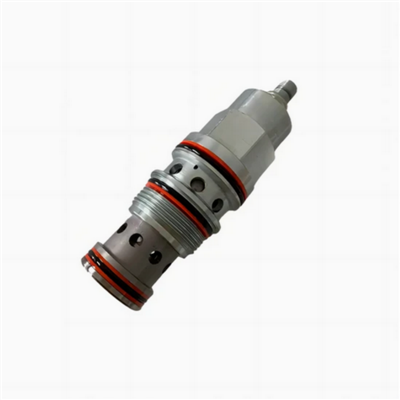


A solenoid valve is an electromechanical device that controls the flow of a liquid or gas through a pipe or tubing system. It consists of a coil of wire, called a solenoid, which when energized creates a magnetic field that opens or closes a valve mechanism, allowing or stopping the flow of fluid.
Solenoid valves are vital in controlling fluid flow with precision, functioning as electromechanical switches. Their design enables them to open, close, or modulate the flow path as per specific application requirements. These valves play a crucial role in applications demanding precise fluid flow control, making them indispensable components.

Benefits of Solenoid Valve
High cost performance
Since the solenoid valve is controlled by a switch signal, it is very convenient to connect with the computer. In today’s era when computers are popular and prices drop sharply, the advantages of solenoid valves are even more obvious. The solenoid valve itself has a simple structure and a relatively low price. It is easier to install and maintain than other types of actuators such as control valves.
Good safety performance
The structure of the solenoid valve is easy to control internal leakage until it drops to zero. The solenoid valve is completed by using electromagnetic force to act on the iron core sealed in the magnetic isolation sleeve. There is no dynamic seal, so the external leakage is easy to block. Therefore, the solenoid valve is very safe to use, especially suitable for corrosive, toxic or high and low temperature media.
Energy saving
The response time of the solenoid valve can be as short as a few milliseconds, even the pilot solenoid valve can be controlled within tens of milliseconds. Because of its self-contained circuit, it is more sensitive than other automatic control valves. A properly designed solenoid valve coil has low power consumption and is an energy-saving product. It is also possible to automatically maintain the valve position by simply triggering the action without consuming electricity at all. The solenoid valve is small in size, which saves space and is light and beautiful.
The adjustment accuracy is not high and is affected by the flow medium
Solenoid valves usually have only two states on and off. The spool can only be in two extreme positions and cannot be adjusted continuously. There are many new ideas trying to break through, but they are still in the trial stage, so the adjustment accuracy is still subject to certain restrictions.
Solenoid valves have high requirements for the cleanliness of the medium, and the granular medium cannot be used. If it is impurities, it must be filtered out first. In addition, viscous media cannot be applied, and the viscosity range of the media for specific products is relatively narrow.
Type of Solenoid Valve
Solenoids in direct-acting valves open the valve magnetically through direct action, hence the name. The coil pushes and pulls a shaft and causes the seat of the valve to shift. When there’s no electrical current, the spring coil returns to the default position. Direct-acting valves need full power to operate the valve. Whether that position is normally open or normally closed depends on the application.
Pilot operated valves use the pressure of the fluid in the line to open the valve. One of the benefits is the ability to use a smaller coil and a lower cost. Although pilot-operated valves use less electrical power, you must have the available pressure to operate the valve.
A 2-way valve is used in On/Off applications that requires a quick response and higher flow. Two-way valves can replace a lever to automate a process. In venting applications, the valve is actuated to release excess pressure on the fluid.
A 3-way valve has three ports. This allows for it to be in 1 of 2 states, or circuits. A 3-way valve can open, close, convey, or distribute, or combine media.
In a 4-way valve, all ports are in the off position by default. They create two states, or actions, and have two exhaust ports. You control the speed of each action by attaching a flow control valve to each exhaust port.
Listed below are the common valve body and wetted part materials.


Stainless steel
Stainless steel offers high corrosion resistance, strength and durability even on high operating temperatures. However, stainless steel can be corroded by chloride ions, unless a higher grade of stainless steel is used.
Bronze
Bronze is an alloy of copper and tin. Bronze is more resistant to cracking than cast iron and possesses some corrosion resistance.
Brass
Brass is an alloy of copper and zinc. Brass is more corrosion resistant, durable and malleable than bronze.
Cast Iron
Cast Iron offers great strength but is prone to cracking due to low ductility.
Polytetrafluoroethylene (PTFE)
Polytetrafluoroethylene (PTFE) is a thermoplastic fluoropolymer which is chemically inert to most substances. This material also offers hydrophobic properties making it suitable for ultra clean and chemical applications.
Polyamide (PA)
Polyamide (PA) offers good mechanical properties comparable to PVC and resistant to salt water.
Polypropylene (PP)
Polypropylene (PP) is a thermoplastic that has comparable mechanical properties to steel and brass with better resistance to acids, salts and alkalis.
Polyphenylene Sulphide (PPS)
Polyphenylene Sulphide (PPS) offers good performance at high temperatures with strong resistance to acids and alkalis
Application of Solenoid Valve
Pneumatic and Hydraulic Circuits
Solenoid valves are used to stop or allow supply of air or liquid (usually oil or refrigerant) along a circuit. Common applications under this category are refrigeration, air compression and lubrication systems. An example of a refrigerant circuit can be seen below.
Automation
Solenoid valves are used whenever fluid flow must be controlled automatically, such as in robotics or factory automation. These solenoid valves are controlled by microcontrollers or programmable logic circuits with a coded set of actions. This control of fluid flow allows a defined sequence of actions to be executed precisely and accurately by a robot.
Industrial and Manufacturing Plant Valve Actuators
For fluids that cannot be handled by solenoid valves, pneumatic, hydraulic and motor actuators are commonly used. However, due to the ease of control using solenoids, solenoid valves are integrated into pneumatic and hydraulic valves actuators. Control valves in industrial plants are usually actuated by a compressed air system controlled by solenoid valves.
Medical, Pharmaceutical and Food Manufacturing
Common uses of solenoid valves in medical equipment are custom valves for dialysis machines, anesthesia machines and ventilator systems. Pharmaceuticals and food processing use solenoid valves complying with hygienic requirements.
A Detailed Look At The Components That Make Up A Solenoid Valve
Coil: The coil is commonly made from insulated copper wire. When a current is applied to the coil, an electromagnetic field forms around the cross-section.
Electrical Connection: The coil is connected to an interface with an electrical drive circuit and power source.
Each coil typically has two connections: One to the power source and one to ground.
Bobbin: The coil wire is commonly wrapped around a structural piece called a bobbin. The bobbin helps to hold the wire in the desired position to create a specific magnetic field.
Coil Cover/Shielding: A cover is placed around the solenoid coil for protection. The cover may be constructed from a material that will provide shielding. Shielding protects the solenoid coil from interference from external electrical noise and protects the surrounding equipment from interference caused by electromagnetic radiation from the solenoid coil.
Plunger/Armature: A ferromagnetic plunger (sometimes referred to as an armature) is placed in the center of the coil or bobbin to convert electrical energy into mechanical work. The magnetic field created from the energized coil will attract or repel the plunger coaxially. The plunger is typically manufactured from a soft iron. Stainless steel materials are not suitable for the plunger because they do not become demagnetized after the current is removed and would not return to their original state.
Valve Seal: The position and movement of the plunger controls the components of the valve body to seal or open flow paths.
Valve Body: At a minimum, the valve body includes the valve seat and fluidic ports. In more complex valve designs, the valve body may also house additional sub-components to optimize valve performance.
Spring: A spring is commonly used within the valve body to bias the plunger and other movable valve components into position when de-energized. Some designs incorporate multiple springs.
Plunger Stop: A plunger stop is often employed to control the length of plunger movement, or stroke, when energized.
How a Solenoid Valve Works?
The solenoid valve has an enclosed chamber inside and ventilated holes in different positions. Every hole is connected with different oil pipes. The chamber has a piston in the middle. The two sides are two pieces of electromagnets. The electrifying magnetic coil will attract the valve body to its side, so that different oil outlets will be opened or closed through controlling the movement of the valve body. However, the oil inlet is constantly open. The hydraulic oil will enter into different draw-off pipes. The oil pressure will be used to drive the piston of the oil cylinder, which will drive the piston rod and then the mechanical device. In this way, through controlling the current of the solenoid valve, the mechanical movement will be controlled. Furthermore, let's briefly learn about the working principle of two main types of solenoid valve.
Can Solenoid Valves Be Partially Open?
Solenoid valves are usually NO or NC and a valve that is partially open would be considered not working correctly. But there are special valves that can be partially open. allowing for adjustable or modulating flow control. These types of solenoid valves are often referred to as proportional solenoid valves.
Proportional solenoid valves offer precise control over the flow rate by varying the position of the valve mechanism in response to an input signal. The input signal, usually an electrical current or voltage, controls the strength of the magnetic field generated by the solenoid. By adjusting the strength of the magnetic field, the position of the valve mechanism can be modulated to achieve a desired flow rate.
It's important to note that not all solenoid valves are designed to be partially open. The majority of solenoid valves operate in an on/off manner, meaning they are either fully open or fully closed.
Steps for cleaning a solenoid valve
Before beginning the cleaning process, refer to the solenoid valve's manual for guidance on the specific tools necessary to complete the job. In general, however, the cleaning process follows these steps:
Monitor the solenoid valve for several days. Make sure it is functioning correctly and has no leaks.
Disconnect the solenoid valve from its power supply.
Disconnect the inlet and outlet connections to remove the valve from the system.
Carefully take the valve apart. Remember the location and orientation of each part, but for more thorough information to disassemble or assemble the valve, please refer to your valve's manual.
Clean each solenoid valve component with a suitable cleaning solution (see next section). Do not use harsh chemicals or abrasives, as these can damage the valve.
Completely rinse each part with clean water to ensure no cleaning solution residue remains.
Inspect the individual parts for damage or wear and replace parts that cannot be repaired.
Read our article on o-ring installation and replacement to determine if any of the valve's o-rings need to be replaced.
Carefully put the valve back together. Ensure that each part is in the correct orientation and that all seals and o-rings are properly installed.
Reinstall the solenoid valve into the system. Ensure the inlet and outlet connections are aligned correctly and are tightened to the appropriate torque.
Connect the power supply back to the solenoid valve and test it to ensure it functions correctly.
Automotive solenoid valves and sensors are our company's featured products. At the same time, our company is also a professional manufacturer specializing in the production of solenoid valve coils and special solenoid valves and other automation supporting components.


Our Certificate


FAQ
As one of the leading solenoid valve manufacturers and suppliers in China, we warmly welcome you to buy high-grade solenoid valve made in China here from our factory. All customized products are with high quality and competitive price.
direct acting solenoid valve, solenoid valve for gas, plastic solenoid valve