How do solenoid valves control fluid flow using electric current?

Solenoid valves are important components in automated control systems. They control fluid flow by using electric current to open and close the flow path. While the working principle of solenoid valves is relatively simple, their applications in industry, agriculture, and construction are extremely widespread. This article will discuss in detail how solenoid valves control fluid flow using electric current.
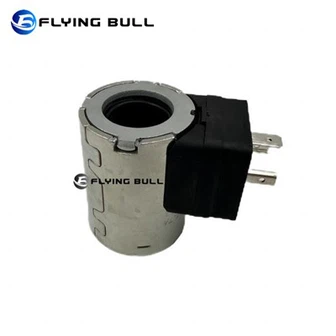
The basic structure of a solenoid valve typically includes a valve body, valve core, coil, and spring. The valve body is the main component, responsible for containing fluid and providing a fluid passage; the valve core is the key component controlling fluid flow, moving freely within the valve body to open or close the fluid passage; the coil is the electrical part of the solenoid valve, generating a magnetic field when current flows through it; the spring is used to reset the valve core when the current is cut off.
The working process of a solenoid valve can be divided into several steps. First, when the power is turned on, current flows through the coil, generating a magnetic field inside the coil. This magnetic field attracts the valve core, causing it to move to a specific position, thereby opening or closing the fluid passage. Specifically, when the valve core moves upward, fluid can pass smoothly through the valve body; conversely, when the valve core moves downward, the fluid passage is closed, and fluid cannot pass through.
There are two main control methods for solenoid valves: normally closed and normally open. In a normally closed solenoid valve, the valve core is closed when there is no current, preventing fluid from passing through; when current is applied, the valve core is attracted, opening the fluid passage. A normally open solenoid valve works in the opposite way: when there is no current, the valve core is open, allowing fluid to flow freely; when current is applied, the valve core is attracted, closing the fluid passage. These two types of solenoid valves can be selected according to actual needs to meet different control requirements.
The advantages of solenoid valves include fast response, precise control, simple structure, and ease of maintenance. Because the working principle of a solenoid valve is based on current control, it can be combined with various automated control systems to achieve precise regulation of fluids. For example, in industrial production, solenoid valves can be used to control parameters such as liquid flow rate, pressure, and temperature, thereby improving production efficiency and product quality. In agricultural irrigation systems, solenoid valves can automatically adjust water flow according to changes in soil moisture to ensure normal crop growth. However, there are some issues to consider when using solenoid valves. First, the operating voltage and current of the solenoid valve must meet the design requirements; excessively high or low voltage may cause the solenoid valve to malfunction. Second, the properties of the fluid also affect the selection of the solenoid valve; for example, corrosive liquids require solenoid valves made of corrosion-resistant materials. Furthermore, the installation location and method of the solenoid valve also affect its performance; it is essential to ensure a secure installation to prevent water or air leaks.
In summary, as an important fluid control component, the solenoid valve achieves precise regulation of fluids through current control. Its applications in various fields not only improve production efficiency but also provide strong support for the development of automated control systems. With technological advancements, solenoid valve technology is constantly evolving, and in the future, more high-performance, high-reliability solenoid valve products will emerge, providing better solutions for fluid control in various industries.