

How does a piezoresistive pressure sensor work?
A piezoresistive pressure sensor is a widely used device in various industries due to its high accuracy, reliability, and cost - effectiveness. As a pressure sensor supplier, I'm excited to share with you how these sensors work.

The Basic Principle of Piezoresistive Effect
The operation of a piezoresistive pressure sensor is based on the piezoresistive effect. The piezoresistive effect was first discovered in the 19th century. It describes the change in electrical resistance of a material when it is subjected to mechanical stress. Certain materials, such as silicon and germanium, exhibit this effect significantly. When a mechanical force is applied to these materials, the atomic lattice structure is deformed. This deformation changes the mobility of charge carriers (electrons and holes) within the material, which in turn alters its electrical resistance.
Structure of a Piezoresistive Pressure Sensor
A typical piezoresistive pressure sensor consists of a sensing element and a signal - conditioning circuit. The sensing element is usually a thin diaphragm made of a piezoresistive material. The diaphragm is designed to deform when pressure is applied. On the surface of the diaphragm, piezoresistors are fabricated. These piezoresistors are arranged in a Wheatstone bridge configuration.
The Wheatstone bridge is an electrical circuit used to measure an unknown electrical resistance by balancing two legs of a bridge circuit. In the context of a piezoresistive pressure sensor, the four piezoresistors in the Wheatstone bridge change their resistance values when the diaphragm deforms under pressure. This causes an imbalance in the bridge circuit, and a voltage output is generated.
Working Process of a Piezoresistive Pressure Sensor
- Pressure Application
When pressure is applied to the sensor, it acts on the diaphragm. The diaphragm is designed to be sensitive to pressure changes. For example, in a liquid - filled environment, the liquid pressure will push against the diaphragm, causing it to deflect. The amount of deflection is proportional to the applied pressure. - Deformation of the Diaphragm and Resistance Change
As the diaphragm deforms, the piezoresistors on its surface also experience mechanical stress. According to the piezoresistive effect, the resistance of these piezoresistors changes. When the diaphragm bends, some of the piezoresistors are stretched, and their resistance increases. Others are compressed, and their resistance decreases. - Output of the Wheatstone Bridge
The change in resistance of the piezoresistors in the Wheatstone bridge leads to an imbalance in the bridge circuit. In a balanced Wheatstone bridge, the output voltage is zero. However, when the resistances change due to pressure - induced deformation, a non - zero voltage is generated at the output of the bridge. This output voltage is proportional to the applied pressure. - Signal Conditioning
The output voltage from the Wheatstone bridge is usually very small and may need to be amplified and conditioned. The signal - conditioning circuit amplifies the small voltage signal, filters out noise, and may also perform other functions such as temperature compensation. Temperature can affect the resistance of the piezoresistors, and temperature compensation is necessary to ensure the accuracy of the sensor over a wide temperature range.
Applications of Piezoresistive Pressure Sensors
Piezoresistive pressure sensors have a wide range of applications in different industries:
- Automotive Industry
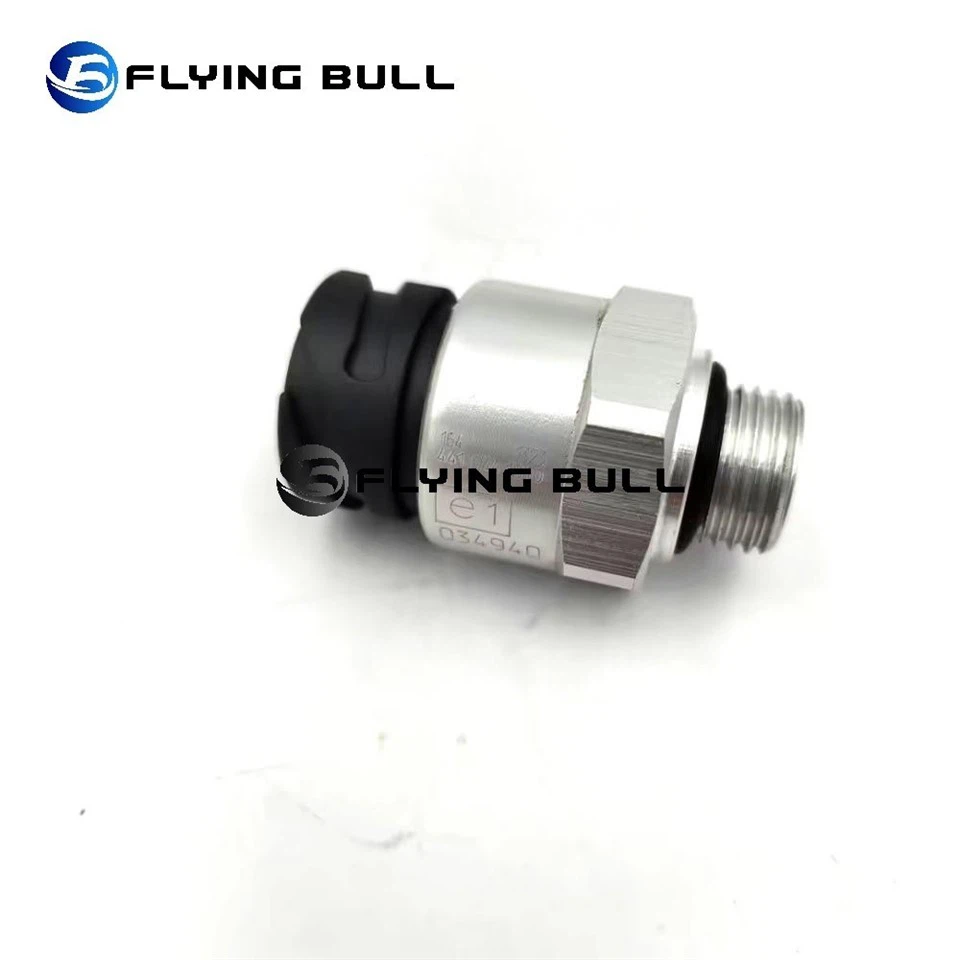
In the automotive industry, piezoresistive pressure sensors are used for various purposes. For example, they can be used to measure tire pressure, intake manifold pressure, and oil pressure. The Multi - vehicle Air Pressure Sensor is a great example of a piezoresistive pressure sensor used in the automotive field. It can accurately measure the air pressure in different types of vehicles, ensuring safe and efficient operation. - Industrial Automation
In industrial automation, these sensors are used to monitor and control pressure in hydraulic and pneumatic systems. They can be used to measure the pressure in pipelines, tanks, and other industrial equipment. The Pressure Sensor 3Mpa is suitable for industrial applications where high - pressure measurement is required. - Medical Industry
In the medical field, piezoresistive pressure sensors are used in devices such as blood pressure monitors and ventilators. They can accurately measure the pressure of fluids and gases, which is crucial for patient diagnosis and treatment. - Environmental Monitoring
These sensors can also be used in environmental monitoring applications, such as measuring atmospheric pressure and water pressure in rivers and lakes.
Advantages of Piezoresistive Pressure Sensors
- High Sensitivity
Piezoresistive pressure sensors can detect very small changes in pressure. Their high sensitivity makes them suitable for applications where accurate pressure measurement is required. - Fast Response Time
They have a fast response time, which means they can quickly detect and respond to changes in pressure. This is important in applications where real - time pressure monitoring is necessary. - Wide Pressure Range
Piezoresistive pressure sensors can be designed to measure a wide range of pressures, from very low pressures to high pressures. For example, the Pressure Sensor 3Mpa can handle relatively high - pressure applications. - Cost - Effectiveness
Compared to some other types of pressure sensors, piezoresistive pressure sensors are relatively cost - effective. This makes them a popular choice for many applications.
Limitations of Piezoresistive Pressure Sensors
- Temperature Sensitivity
Although temperature compensation can be performed, piezoresistive pressure sensors are still sensitive to temperature changes. Extreme temperatures can affect the accuracy of the sensor. - Non - linearity
There may be some non - linearity in the relationship between the applied pressure and the output voltage, especially at high pressures. Calibration is often required to correct for this non - linearity.
Our Offerings as a Pressure Sensor Supplier
As a pressure sensor supplier, we offer a wide range of piezoresistive pressure sensors to meet the diverse needs of our customers. Our sensors are designed with high - quality materials and advanced manufacturing processes to ensure high accuracy and reliability.
In addition to the Multi - vehicle Air Pressure Sensor and Pressure Sensor 3Mpa, we also have the Nitrogen Oxygen Sensor. This sensor can be used to measure the pressure and composition of nitrogen and oxygen in various environments, which is very useful in industries such as chemical and environmental monitoring.
Contact Us for Procurement
If you are interested in our pressure sensors and would like to discuss procurement, please feel free to reach out to us. We are committed to providing you with the best products and services. Whether you need a small - scale order for a research project or a large - scale order for industrial production, we can meet your requirements.
References
- Smith, C. S. (1954). Piezoresistance effect in germanium and silicon. Physical Review, 94(1), 42 - 49.
- Fraden, J. (2010). Handbook of modern sensors: physics, designs, and applications. Springer Science & Business Media.
- Kuo, C. F., & Lin, C. C. (2008). Design and fabrication of a piezoresistive pressure sensor with a silicon - on - insulator diaphragm. Sensors and Actuators A: Physical, 143(2), 321 - 326.